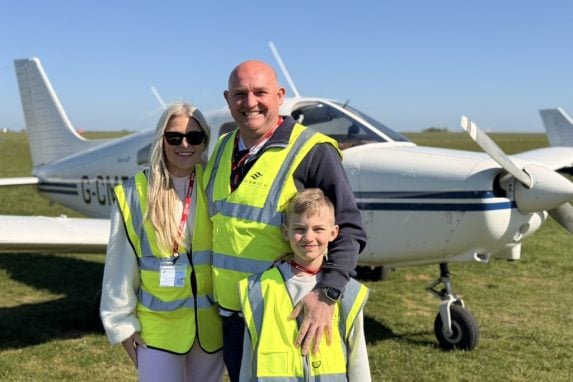
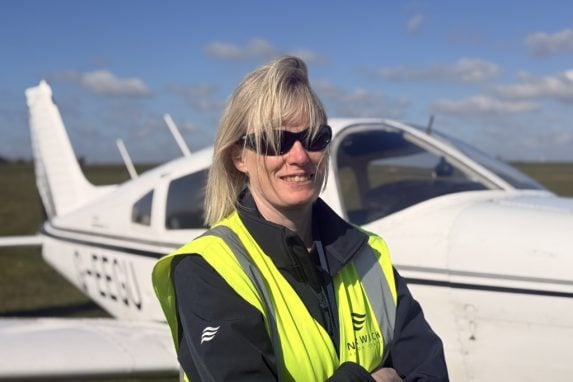
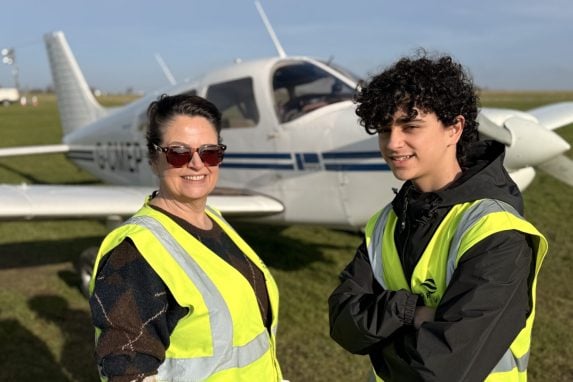
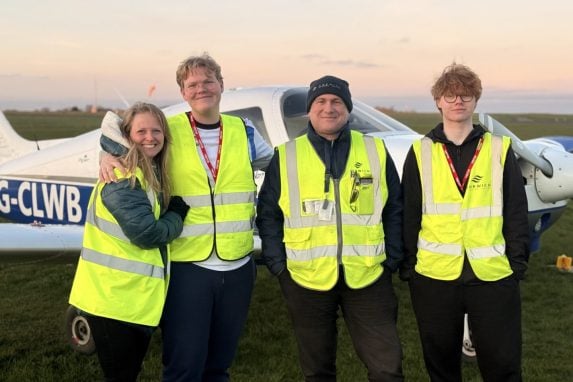
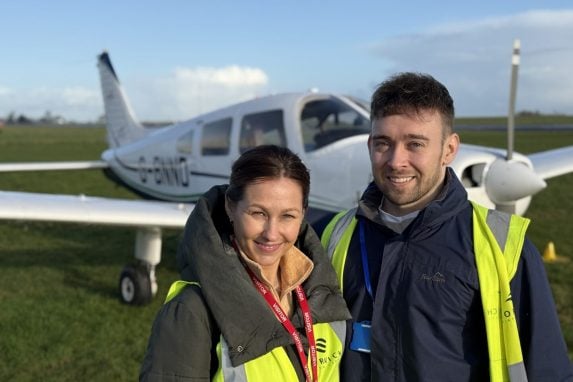
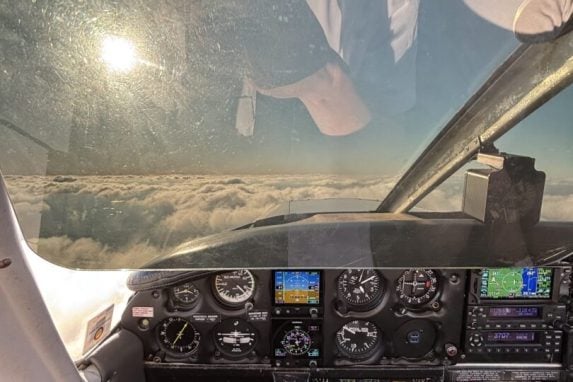
Before you read the comprehensive information below we would strongly recommend booking an Onboarding meeting with one of our team. We can do the meeting online or in person at the flight school.
There is no obligation on you and it is completely free! We are very transparent and we want you to be fully armed with all the information prior to commencing (or thinking of commencing) flight training.
Just phone 01603 369928 (Option 1) or email the our team who will arrange a meeting operations@NorwichAviationCentre.co.uk
Have you ever dreamed of taking control of an aircraft, exploring the skies and experiencing the freedom of flight?
At Norwich Aviation Centre (NAC), we can help turn that ambition into reality.
Whether you are looking to fly for pleasure, take friends and family on adventures, or begin a journey towards becoming a professional commercial pilot, the Private Pilot Licence (PPL) is the perfect place to start.
You don’t need any previous flying experience, and you don’t need to be a mathematical genius or an aviation expert. Our experienced instructors will guide you through every stage of your training, developing your knowledge, confidence and flying ability at a pace that suits you.
Here’s everything you need to know about becoming a qualified private pilot.
Ok let get the thorny subject of costs out of the way! Firstly ignore the online quotes of £12000-13000 it doesn’t exist! Many flight schools will offer you the dream deal and then throw in the extras later on down the line. For example you will land and find you havbe additioanl landing fees, or fuel surcharges or “hey you need to buy this equipment,” it all adds up. They also always quote the CAA minimumWe give you the relaistic price you should budget for.
A UK Civil Aviation Authority (CAA) Private Pilot Licence for aeroplanes, known as a PPL(A), allows you to fly aeroplanes privately, subject to the ratings and privileges you hold.
Once qualified, you can:
A PPL is intended for private, non-commercial flying and does not ordinarily permit you to be paid for acting as a pilot.
You can begin flying lessons before you are old enough to fly solo. There is no general minimum age prescribed for starting dual flight instruction, although your instructor will need to be satisfied that you are physically and mentally ready to benefit from the lessons.
The important milestones are:
| Milestone | Minimum age |
|---|---|
| Begin flying lessons with an instructor | No prescribed minimum age but you must be 14 to claim any instructed hours towards the licence |
| First supervised solo flight | 16 years |
| Obtain a Private Pilot Licence | 17 years |
Your first solo flight is one of the most memorable moments in your aviation journey. It is the first occasion you take off, fly and land an aircraft entirely by yourself, with your instructor supervising from the ground.
For younger students, training can start well before their 16th birthday, allowing them to build flying experience and theoretical knowledge in preparation for that milestone.
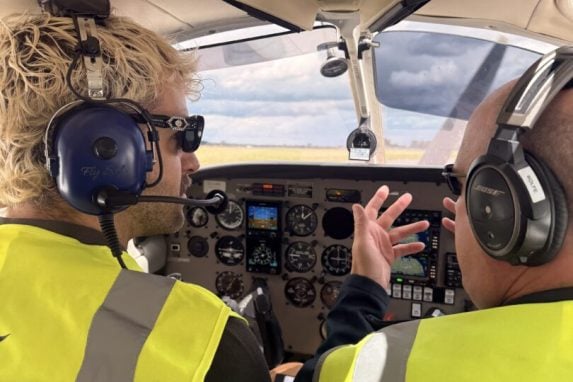
Your journey begins in the cockpit with one of our qualified flight instructors.
During your initial lessons, you’ll learn how an aircraft flies and develop the skills required to control it safely.
Training includes:
Training is progressive, with each lesson building on the knowledge and experience gained during previous flights.
At NAC, we operate a flexible pay-as-you-go training system, allowing you to book lessons around work, education and other commitments.
Before you can fly solo, you must meet the applicable medical requirements.
For a full UK Part-FCL PPL(A), the standard requirement is a CAA Class 2 Medical Certificate.
This is issued by a CAA-authorised Aeromedical Examiner (AME), a doctor specially qualified to assess the medical fitness of pilots.
The examination may include an assessment of your:
You do not need perfect eyesight to become a pilot. Many pilots wear glasses or contact lenses, and certain medical conditions do not automatically prevent you from qualifying.
The validity of a Class 2 medical certificate depends on your age:
| Age | Standard validity |
|---|---|
| Under 40 | Up to 5 years, not beyond age 42 |
| 40–49 | Up to 2 years, not beyond age 51 |
| 50 and over | 12 months |
We recommend arranging your medical early in your training, particularly before making a significant financial commitment.
Our team can guide you towards the CAA information needed to locate an authorised Aeromedical Examiner.
Flying isn’t just about controlling an aircraft. You’ll also learn the knowledge required to make safe, informed decisions as a pilot.
To qualify for your PPL, you must pass nine CAA theoretical knowledge examinations.
| Examination | What you’ll learn |
|---|---|
| 1. Air Law | Aviation regulations, airspace, pilot responsibilities and operating rules |
| 2. Human Performance | How fatigue, health, stress and human limitations affect flying |
| 3. Meteorology | Understanding weather, forecasts, clouds, wind and aviation weather reports |
| 4. Communications | Aviation radio procedures, terminology and communication rules |
| 5. Navigation | Using aeronautical charts, headings, calculations and navigation techniques |
| 6. Principles of Flight | How aircraft generate lift and the aerodynamic principles of flight |
| 7. Operational Procedures | Safe operating practices, emergencies and aircraft procedures |
| 8. Flight Performance & Planning | Aircraft loading, weight and balance, fuel planning and performance |
| 9. Aircraft General Knowledge | Aircraft systems, engines, instruments and technical knowledge |
The examinations are predominantly multiple-choice assessments conducted through the CAA examination system.
The normal pass mark is 75% for each examination.
You don’t need to complete all nine exams at once. Most students progressively work through them alongside their practical flying lessons.
There are also time limits: under the standard examination rules, students must complete the examination series within 18 months and then complete the remaining training, skill test and licence application within the applicable 24-month validity period.
At Norwich Aviation Centre, we offer access to online theoretical knowledge training through Bristol Groundschool (BGS), giving you the flexibility to study at home and fit your learning around your flying.
Our instructors are also available to help explain more challenging subjects and connect the theory to your practical flying experience.
Your first solo is a major milestone and something you’ll remember for the rest of your life.
Once your instructor is satisfied that you can safely operate the aircraft independently, including dealing with foreseeable situations and emergencies, you can be authorised to fly solo.
You must be at least 16 years old, hold the appropriate medical certificate and have completed the necessary training and checks.
Your instructor will carefully assess your readiness before authorising the flight.
Your first solo will normally involve a short flight in the airfield circuit, taking off and landing without an instructor on board.
It is an incredible achievement and marks your progression from being a student learning to fly to someone capable of safely operating an aircraft independently.
As your confidence and experience develop, you’ll progress beyond the local training area and learn to navigate between different aerodromes.
The current standard UK Part-FCL PPL(A) course requires a minimum of 40 hours of flight instruction, subject to the applicable approved training route and any permitted credits. At appropriately approved ATOs, the regulatory minimum may be reduced to 35 hours.
Your training must include:
The qualifying cross-country flight is another significant milestone.
You’ll plan your route, assess the weather, calculate fuel requirements, communicate with Air Traffic Control and navigate to your destinations independently.
Although the regulations establish minimum flying hours (40), your actual training time will depend on your individual progress and proficiency. NAC always targets to finish you in the minimum number of hours
At NAC, our priority is producing safe, competent and confident pilots, not simply completing a minimum number of hours.
Alongside your flying training, you’ll learn how to communicate correctly with Air Traffic Control and other aircraft.
To independently operate an aircraft radio, pilots generally require a Flight Radiotelephony Operator’s Licence (FRTOL).
Obtaining your FRTOL involves three key requirements:
1. Communications theoretical examination
You must pass the PPL Communications theoretical examination, one of the nine PPL exams listed above. You do not need to sit an additional written Communications exam if you have already passed the applicable PPL examination.
2. FRTOL practical examination
You must complete a separate practical radiotelephony test with an authorised examiner.
This tests your ability to communicate using correct aviation terminology and procedures during simulated flight operations.
You may be assessed on communications covering departures, arrivals, controlled airspace, routine flight situations, and emergency or urgency calls.
3. English Language Proficiency (ELP)
You must demonstrate the required standard of aviation English, at ICAO Level 4, 5 or 6. Native English speakers are generally assessed as Level 6 automatically.
For eligible candidates, this may be assessed during the FRTOL practical test.
The minimum age for initial issue of an FRTOL is 14.
At NAC, operating from Norwich Airport provides our students with valuable experience communicating with professional Air Traffic Control services as part of their everyday flying training.
Once you’ve completed the required training, passed your theoretical knowledge examinations and demonstrated the necessary flying proficiency, you’ll be recommended for your final PPL Skill Test.
This is the aviation equivalent of your practical driving test.
You’ll fly with a CAA-authorised Flight Examiner, who will assess your ability to safely plan, conduct and manage a flight independently.
The test typically covers:
The examiner is looking for safe, competent and consistent flying, rather than perfection.
Your flight school will recommend you for the test only when you have demonstrated that you are ready.
You must be at least 17 years old to be issued your PPL. Students approaching their 17th birthday should discuss the timing of their final Skill Test and licence application with the Head of Training.
Congratulations! Once you have passed your Skill Test and met all the CAA requirements, you’re ready to apply for your licence.
Your application will include evidence of your completed training, examination results, flying experience and Skill Test.
Your application is submitted to the UK Civil Aviation Authority, which reviews the documentation and issues your licence.
Once your licence and applicable aircraft rating have been issued, and you hold the necessary valid medical certificate, you can exercise your new private pilot privileges.
You are now a qualified Private Pilot!
Learning to fly is a significant personal achievement, and choosing the right flight school is an important part of your journey.
At Norwich Aviation Centre, we believe flight training should be professional, enjoyable, transparent and tailored to each individual student.
From your first lesson through to your final examination, our team will support you in developing the skills, knowledge and confidence needed to become a safe pilot.
Our students benefit from:
Whether your ambition is to enjoy recreational flying or progress towards a career in aviation, your journey can begin with us.
Your aviation adventure starts here.
Contact Norwich Aviation Centre to discuss your Private Pilot Licence training, arrange an introductory flight or discover how we can help you achieve your ambition of becoming a pilot.
Norwich Aviation Centre — Flight training re-imagined.
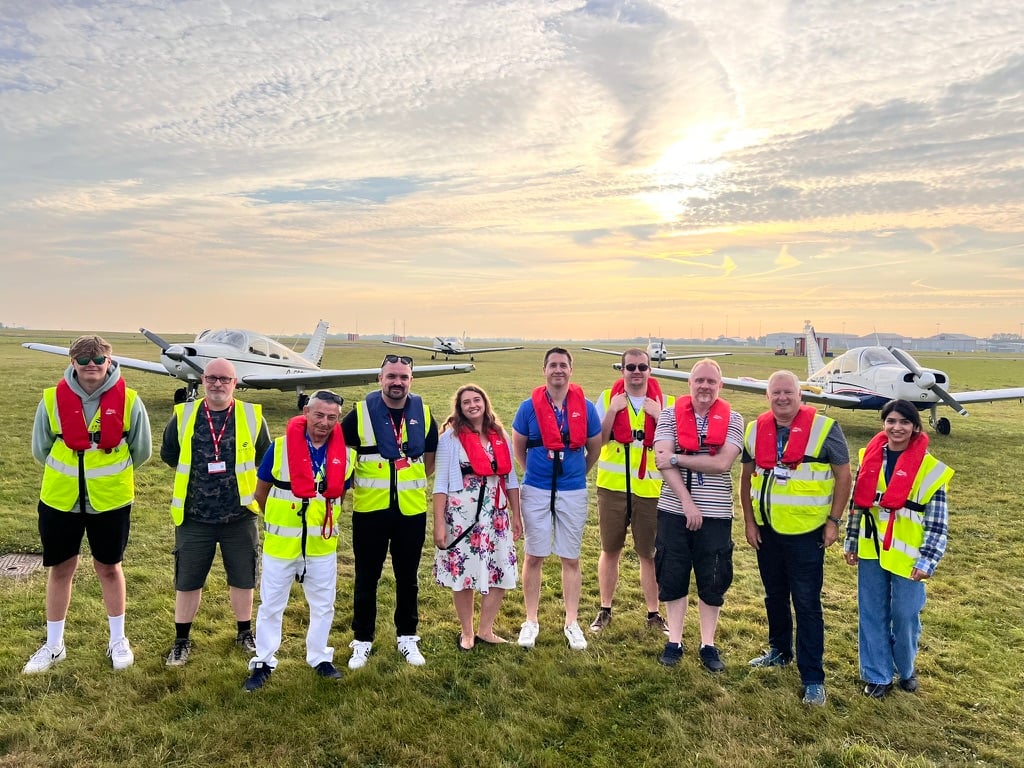
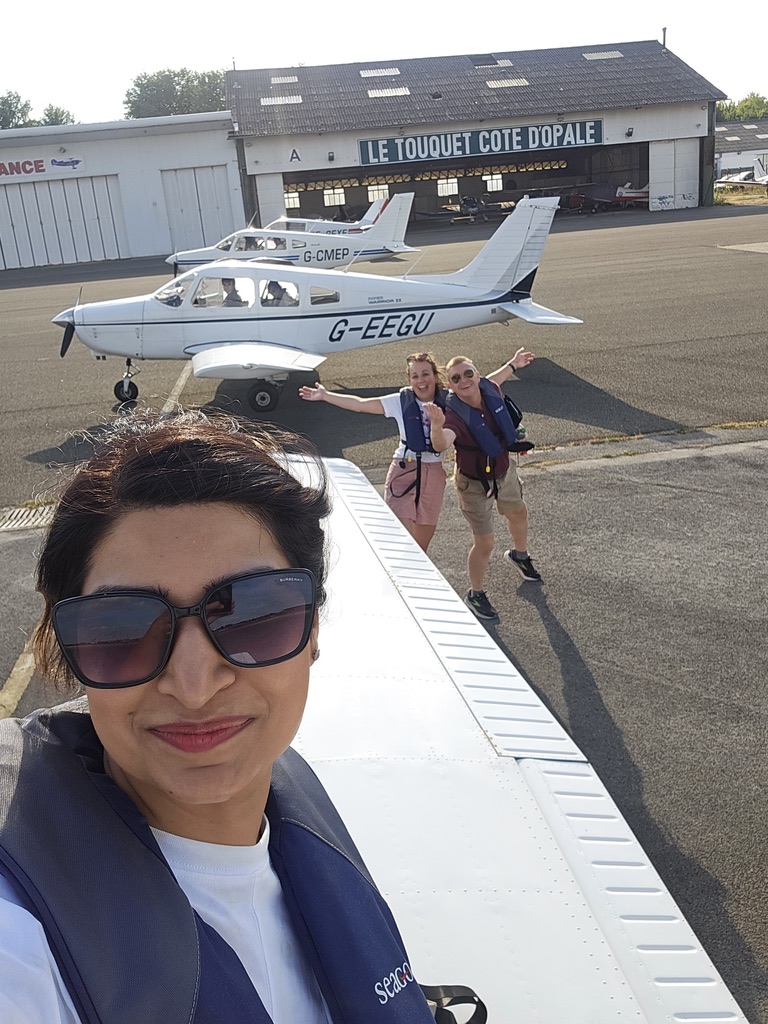
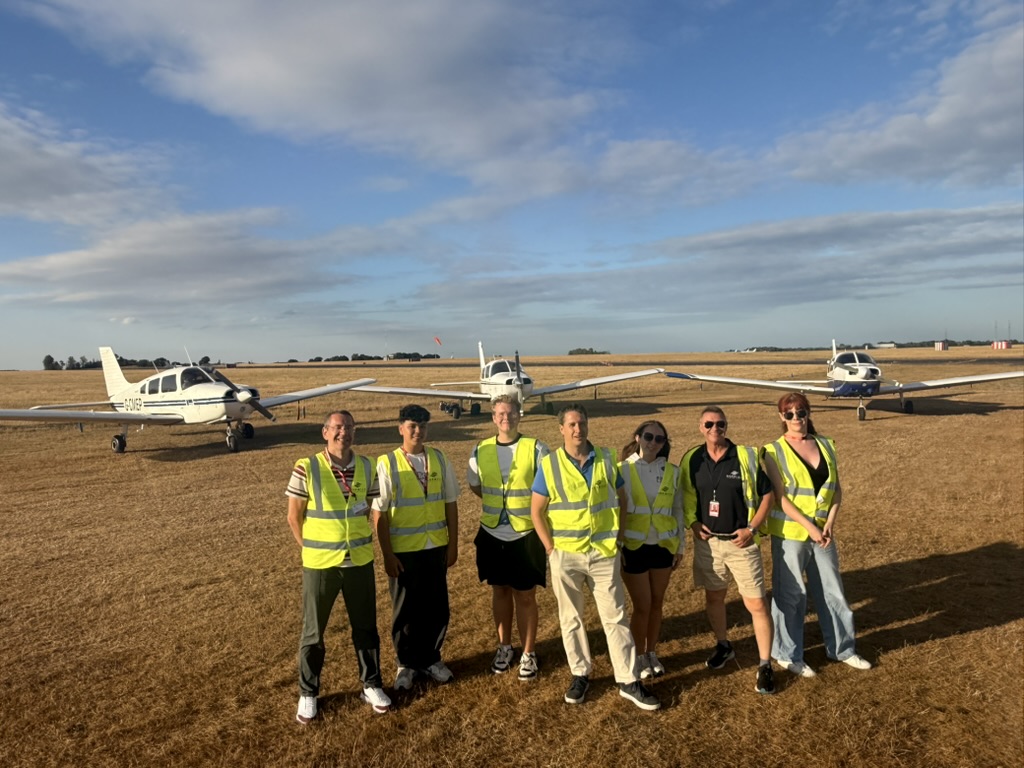
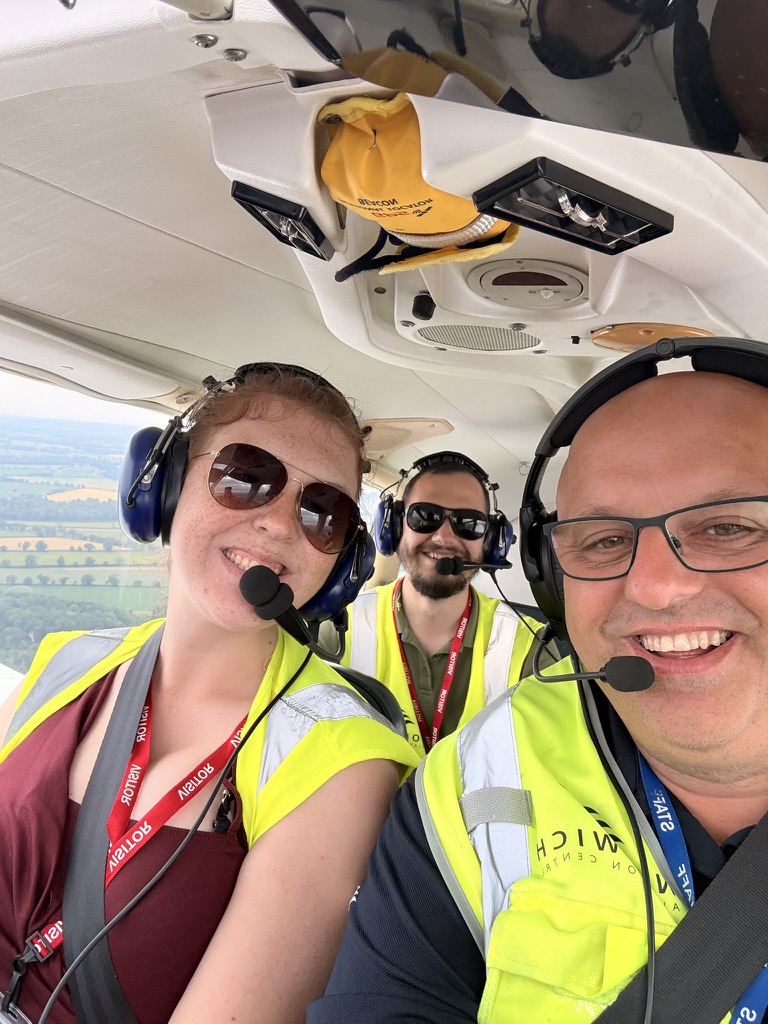
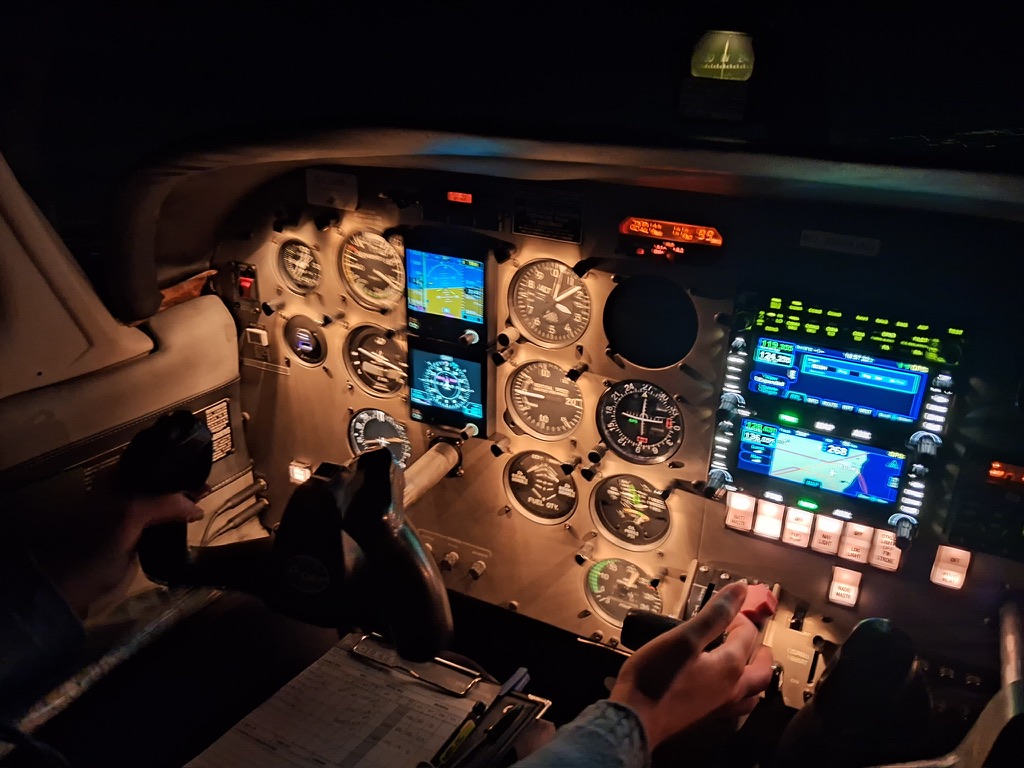
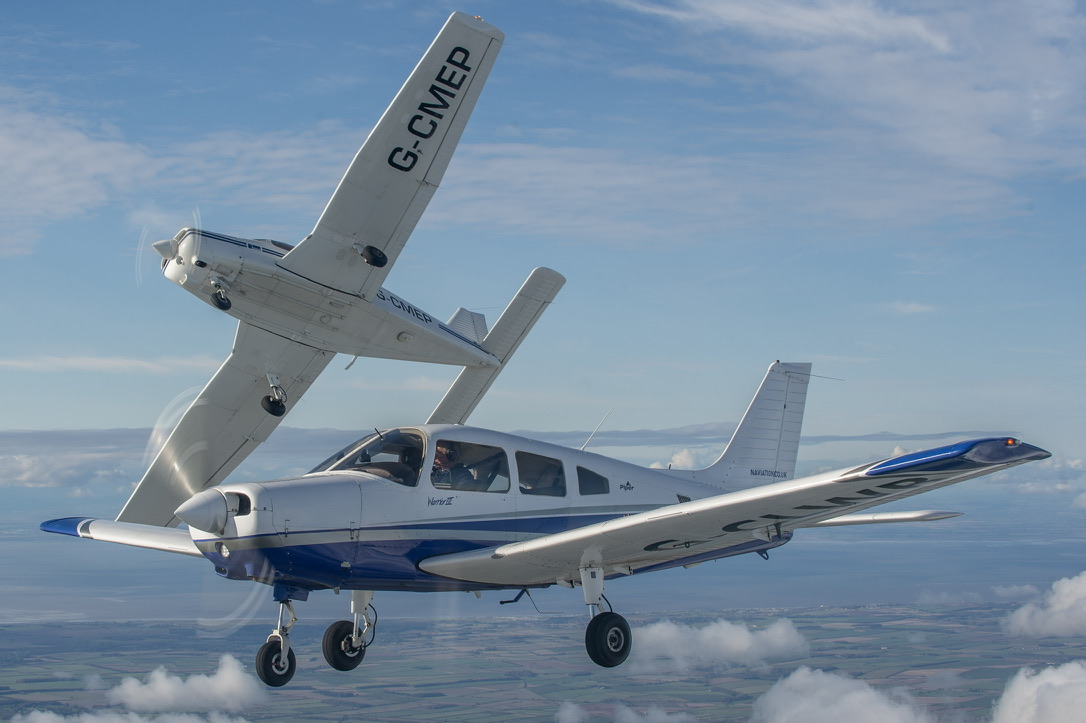
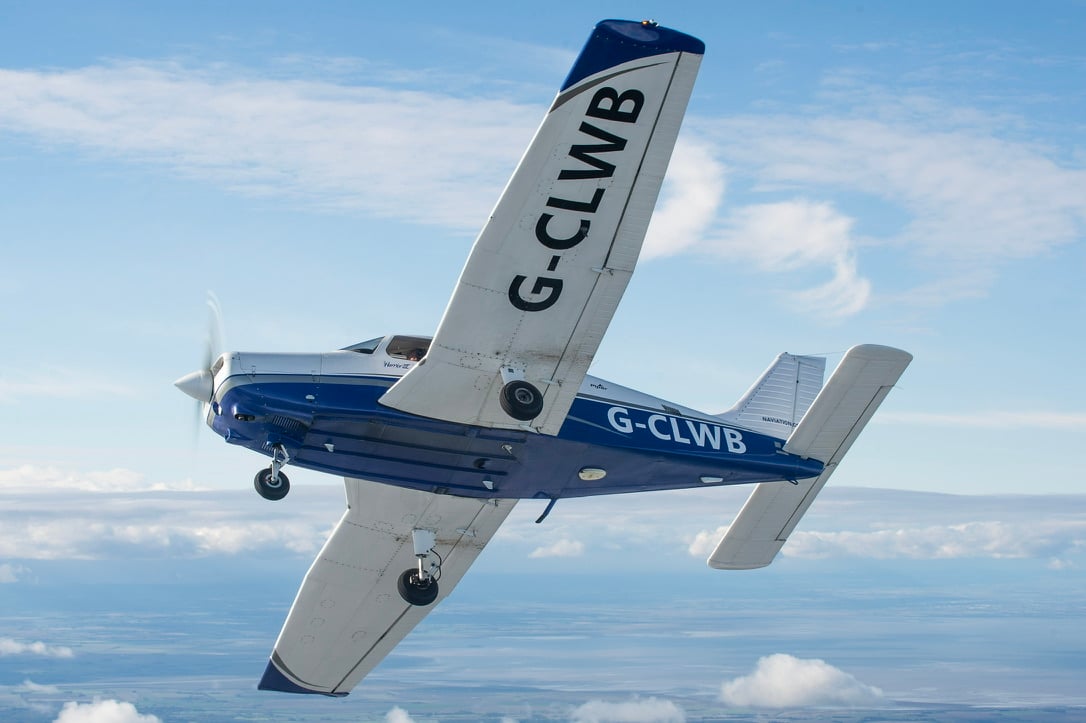
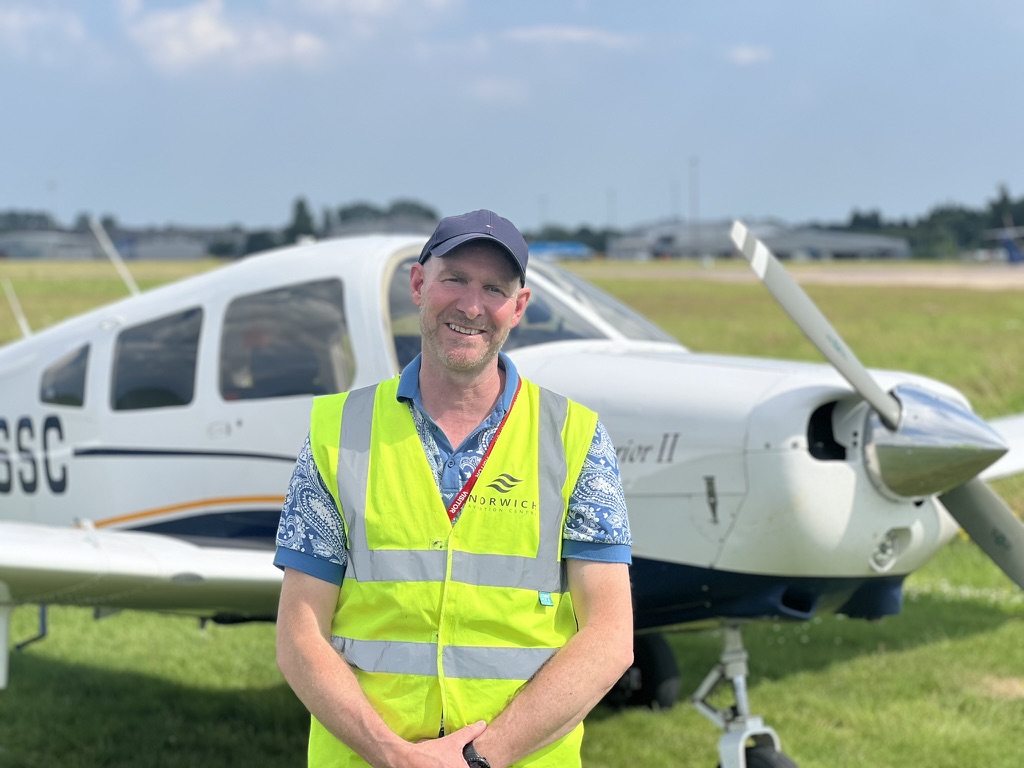
Our Air Experience flights are an exhilarating flight adventure that allows you to soar through the skies and witness the breathtaking beauty of Norfolk and Suffolk from above. As you embark on this amazing journey, you will be treated to a truly unforgettable experience aboard one of NAC’s high specification aircraft.
At Norwich Aviation Centre (NAC), we believe in offering our customers the finest aviation experiences, combining luxury, safety, and an unrivalled sense of adventure. Our Air Experience packages are meticulously designed to provide you with a unique opportunity to explore the stunning landscapes, landmarks, and iconic sites of Norfolk and Suffolk.
Imagine taking to the skies and beholding the sprawling coastlines, charming countryside, and historic sites from an entirely new perspective. As you ascend, you will feel a surge of excitement, and as the aircraft gracefully glides through the air, you’ll be captivated by the panoramic views unfolding beneath you.
NAC’s high specification aircraft are equipped with state-of-the-art technology and designed to ensure your utmost comfort and safety throughout the flight. Our professional and experienced pilots will guide you on this awe-inspiring journey, sharing their knowledge and love for aviation.
Whether you are a thrill-seeker, a nature enthusiast, or simply someone seeking a unique experience, an Air Experience with NAC is an opportunity not to be missed. It is a chance to escape the ordinary, to break free from the confines of the ground, and to discover the hidden gems of Norfolk and Suffolk from an entirely new vantage point.
Not only will you witness the iconic sites like the stunning Norfolk Broads, the picturesque North Norfolk Coast, and the historic city of Norwich, but you’ll also have the chance to customise your flight plan. We offer tailored Air Experiences that can be adapted to your preferences, allowing you to explore specific areas or landmarks that hold personal significance to you. Speak with us if you have any requirements because at the end of the day this is your experience.
So, buckle up, and get ready for an extraordinary adventure that will leave you with memories to last a lifetime. Treat yourself or surprise a loved one with this truly remarkable gift—the gift of flight. Join NAC on an Air Experience, and let us take you on a journey that will awaken your sense of wonder and give you a newfound appreciation for the beauty of Norfolk and Suffolk from above.
No….but…..
Please bring some form of photographic ID with you. We are entering air side of an international airport as such we have to be security aware and conscious. If you do not have a passport, driving licence or other recognised identity card then please call in advance so we can make arrangements.
If you arrive without a pre-arrangement and without ID then we may have to cancel your flight and there is only a refund of 50% in this instance, please don’t forget your ID
We do not allow high heels or shoes which could damage the wing as your try to board the aircraft.
Other than this we do not mind what you wear providing it is sensible and doesn’t interfere with the aircraft controls. (ie no big yellow chicken outfits)
We would recommend nice flat shoes or trainers especially if you would like to have a go at flying.
In the winter we would recommend typical warm winter clothing but in the summer we strongly recommend light cotton clothing because it can become hot in the cockpit before we take off.
If you are unsure give us a call to discuss.
Ok has anyone ever been sick in one of our aircraft? The answer is yes but that is extremely rare.
We have taken people flying who are known to get travel sick and they have always been ok. However; in the event of such an issue we do carry sick bags onboard which we can provide you with before the flight if you feel you might need one….. but we doubt it will be necessary!
Don’t be!
We take people flying who are petrified of flying all the time, in fact some people come to us to try and get over their fear.
We are trained to put you at ease from the start, if you are nervous then do mention this to our staff or your pilot before you fly.
One of the fears of flying is that you can’t see what is going on and the big planes just move without you knowing what is about to happen. In our aircraft your pilot will be talking to you all the time and they will tell you what is going on and you will be able to see it for yourself.
Don’t worry you will have an amazing experience and when you get back on the ground you will wonder what the worry was about.
Yes it is!
Flying in itself presents an elevated risk to you whether you are flying with commercial operators such as RyanAir, EasyJet, BA or in small aircraft like ours.
As we use our light aircraft for commercial operations they are also maintained to a Certificate of Airworthiness (CoA) standard by a CAA approved Aircraft Maintenance Organisation (AMO).
Every 50 hours the aircraft are returned to the AMO for a maintenance check and oil change. Every 100 hours the aircraft are taken to the AMO for an enhanced inspection criteria, then every year there is also an annual inspection. On top of that we have time limited parts on the aircraft which must be replaced after so many hours of operations….Aircraft maintenance and inspection is the biggest expense of running aircraft!
So one thing to consider is we only have one engine on the aircraft, what happens if it fails? Firstly; it is extremely rare for an engine to fail completely in flight. Secondly in the unlikely event that it did completely fall apart and fail, then the aircraft will not fall out of the sky! It becomes a glider and we would glide the aircraft into the nearest airfield, or into a nice long field of which we have thousands of in Norfolk and Suffolk. Our pilots are highly experienced and trained for any such eventuality.
Has it ever happened to us…. no!
NAC have parking at the front of our building. We have limited parking so we ask for only one car per flight. If you plan to arrive in multiple cars please do call ahead so we can arrange alternative parking.
Absolutely yes!
Take your phone and take as many videos and photos as you wish. We may ask you to ensure the phone is in flight mode but that is at the discretion of the pilot.
As a rule the answer is no. This is because the animals need to be restrained in the cockpit from interfering with the safety of the flight.
However; in certain circumstances we may allow it depending on a case by case evaluation of the request.
Please call us to discuss if you feel you have a need to bring your pet.
Absolutely – yes please!
We want you to enjoy your experience and create memories, please share you pictures and videos with us before you leave.
We do not allow the positioning of Action Cameras and Audio recorders in the cockpit for reasons of flight safety.
HOWEVER: NAC do offer a professionally made video of your flight using multiple camera views and with recording cockpit intercom communications including Air Traffic control. Please discuss with us the video packages.
Limits are solely based on a persons ability to access and egress the cockpit unaided and that their size does not interfere with the cockpit controls.
However if you are concerned please call us.
The aircraft does have a weight limit, so we will ask you for your weight, please do not be offended, but do tell the truth as it is essential for flight safety that we properly calculate the aircrafts weight and balance. We reserve the right to weigh passengers prior to any flight.
We are proud to say we are welcoming of all people of all abilities. Access to our office is disabled friendly.
There are some occasions where we need to conduct a risk assessment of the likelihood and assistance needed for a disabled person to evacuate the aircraft in an emergency.
Please do not be put off by this…. call us to discuss.
We want everyone to enjoy aviation!
Nope!
Anyone young and old can come play at NAC and enjoy the thrills of aviation.
Babies and ickle-children are welcome to come enjoy the experience, you can bring your car booster seats or car chairs for them to sit on.
You know your children best, if they want to sit in the front they are welcome to so long as they can listen to the instructions of the pilot
Unfortunately not.
Any food or drink consumed on our aircraft must be purchased through our flight operations centre.
Unless you have a bag of skittles then we love skittles!
No.
We will provide you with a headset and high visibility vest for your experience.
We would recommend arriving 45 minutes before your flight time. This allows you to be briefed on your flight and to take some time to relax before the experience.
Then the time of you flight you have paid for plus an additional 30 minutes for a debrief.
So for a 1 hour flight experience allow us 2 hours and 15 minutes in total
We are happy to take someone out to the aircraft parking area to get some photos of you leaving but they would need to come back to the office once you taxi out.
We would recommend a great parking spot at each end of the runway to go and take some pictures.
At NAC we like to keep control of everything we do but the weather is one thing we cannot adjust.
We will review the weather for the days leading up to your flight, if there is anything forecast that will cause a problem for your flight we will give you the most amount of notice possible to reschedule.
On the day we will check the forecast continuously and update you if anything locally happens that isn’t forecast.
We will always reschedule your flight to your convenience if this happens.
These things happen!
For genuine reasons we will reschedule your flight for you free of charge. We can apply a £10 administration fee in some rare cases.
Give us a call 01603 369928 and explain why your late and your ETA, we should still be able to accommodate you.
For reasons of flight safety we do not allow you to install your own cameras in our cockpits, however we do have our approved camera systems and recording equipment we use to film your flight if you request it.
Our prices are available on the website, contact us to discuss the options.
Yes, all our merchandise is available at our flight operations centre or on our website.
Yes outside our office are the public toilets with disabled access.
We encourage you to go to the bathroom before the flight as there are no toilets on the aircraft.
Yes we do.
We offer gift cards for 1st lessons, air experiences and for account additions for regular flyers.
All gift cards are valid for 6 months.
We require you to declare any medical conditions before your flight booking.
It is rare that we would refuse a flight to you based on any medical condition but in certain exceptional circumstances we may ask for a doctors letter to say you are fit to fly.
We reserve the right to refuse a flight to anyone we believe is not fit to fly.
For reasons of flight safety we do not permit passengers onboard our aircraft who are under the influence of drink or drugs or who we believe may be intoxicated.
Should you arrive for your flight in such a condition then your flight may be refused and you would not be entitled to a refund. However; we may consider a rebooking for the future but that does incur an administration charge of £30.
If you are on medication which may affect your presentation then please let us know in advance.
The short answer is yes! Training to be a private pilot is how we all started in our aviation careers. Whether you want to fly privately for fun or commercially we can help you achieve you dreams.
That is entirely your choice! It also depends on your budget and time constraints with family commitments and work. At NAC we focus on the students experience and we will encourage you to be the best and safest pilot you can be, whilst we make the whole journey an amazing experience.
You can complete a PPL within 6 weeks if you want to work hard to achieve it quickly. Most people complete the 45 hours, courses and exams within 3 months but some just take their time and do it over the course of the year or longer on a part time basis.
The choice is yours, this is your journey.
We offer full-time PPL Ground School courses to help private pilots achieve the highest standard in their PPL exams. This is a 5-day course with the exams being taken after each tuition day or the morning after the relevant subject. Our courses are delivered by talented and enthusiastic instructors, with a wealth of experience, who will make sure they work with you to get through your exams.
Commercial pilots require a class 1 medical
Private Pilots require a class 2 Medical.
It is no secret that the medical is stringent in terms of ensuring you are safe and fit for flight but it is not unfairly stringent. We have experience of people with heart conditions that have managed to get their medical subject to investigation by the Aero medical Examiner (AME). It is all there to ensure you, your passengers and people on the ground are safe.
The medical is an in depth assessment of your health and condition, you are required by law to provide the AME with information on any previous medical conditions, injuries or hospital treatment.
You will require your medical before your first solo so we always encourage you to undertake the medical before committing significant money to your flight training in case something is found which prevents you flying.
Class 1 and 2 medicals can be conducted on site with our resident AME.
Contact us for information and bookings.
To be offered a reduced rate for the PPL you will need to pay Section 1 fees (50%) up front, section 2 fees (50%) will need to be paid before you commence that section of your training.
You can pay per course you do if this suits at the standard hourly rate.
One landing and approach fee is included in the course rates.
Approach fees associated with flight tests will be re-charged to students.
You will become a private pilot where you will be able to fly Visual Flight Rules (VFR) on your own. This means you can fly clear of cloud during the day.
We offer Instrument Rating Restricted (IR(R)), Night Rating and Performance flying courses to enhance your skills and privileges. Get in touch with us to discuss your PPL journey and our advanced ratings courses.
Details are available on our website and you can buy online, otherwise give us a call to discuss you aviation goals and we can put together a package for you.
You are required to complete 45 flight hours as a minimum to obtaining your PPL. As part of your training you will also need to complete 9 online exams.
The exams are not difficult but you will need to do some self study. However; we do have an intense PPL ground school course available where you can complete your exams in 1 week.
You will also need to complete a Radio Telephony (RT) exam and included with that is the English Language proficiency test.
Finally once you are ready for the General Skills Test our examiner will take you up and test your skills and abilities to pass the course.
You are now a private pilot.
No you do not but your license will be a UK CAA National licence unless you opt for our EASA route.
You will need to pass an English speaking exam which is completed as part of your Radio Telephony (RT) exam.
No previous flying experience is required at all. The majority of our students begin with no aviation background, and our training programmes are specifically designed to take you from your very first introduction to flying through to confident, safe, and competent flight.
Your first session starts with a clear, unhurried ground briefing where your instructor explains how the aircraft works, what to expect in the air, and how safety is managed throughout. Everything is taught step-by-step, at a pace that suits you, and nothing is assumed. You will never be expected to know something you have not yet been taught.
From day one, you are paired with professional instructors who train to commercial standards and are experienced in working with complete beginners. Many students are surprised by how quickly they feel comfortable once they realise how structured, calm, and supportive the environment is.
In short, having no prior experience is entirely normal, and it is exactly who our training is built for.
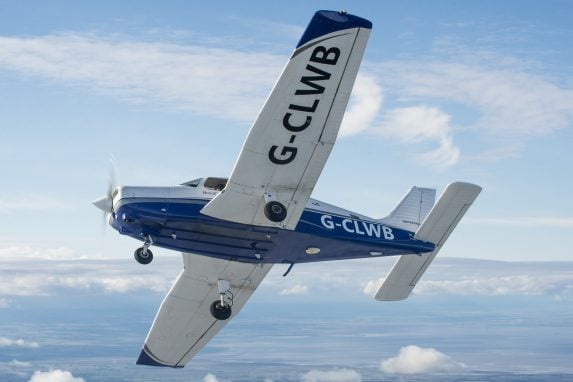
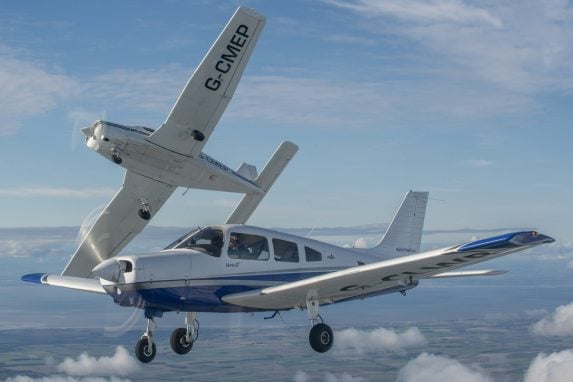
We operate a fleet ofPiper PA28 Warrior 2 aircraft which are maintained to the highest specification.
We are also bringing in:
You will be sold from other schools offering you a private pilots license for £8-12k in reality your training will be higher than that
The real cost of your training including you flying costs, exam fees, pay for your flight equipment and pay for landing fees you will be looking closer to £14,500.
NAC are upfront about the true costs with you, we don’t give you any surprises once you are in the door.
Flying our aircraft are safe.
Our aircraft are maintained to Certificate of Airworthiness (CoA) standards with an approved Aircraft Maintenance Organisation (AMO).
Flying in any aircraft carries an element of risk as does driving a car or riding a motorbike. The safety statistics for General Aviation are far better than driving on the road.
General aviation carries a bit more unavoidable risk compared to commercial jet flying based on factors such as multiple engines on commercial traffic, multi-pilot environments, and more advanced training before flying a commercial aircraft. However; that does not mean GA is unsafe. At NAc our professional commercial pilots train you to handle emergency situations including control failure, instrument failures, control outside of the flight envelope, and engine failures.
You will be trained by the best at NAC to handle anything thrown at you.
There are some medical conditions where you physically wouldn’t be able to obtain a medical to fly but this list is very small.
You need to contact us to discuss your condition and we can see the advice of our preferred Medical examiner who will give advice on your ability to fly with your condition.
In most cases, as long as your condition is evidentially controlled you will be ok to fly.
We will advise you to get a medical before starting your flight training.
Your aircraft is kept on the grass in NAC’s Light Aircraft Park (LAP) between Delta and Echo taxiways here at Norwich
Our grass Light Aircraft Park (LAP) is not boggy and is naturally well drained.
NAC operate our own aircraft from this area consistently throughout the 12 months of the year and we have never had to cease operations due to the conditions.
The LAP is reinforced with plastic grass grids from the moment you enter from the asphalt taxiways.
Our aircraft storage rates are comparable with all the other airfields in the area. The cost is only slightly more at Norwich (compared to a grass strip) due to all the extras you get with your aircraft being based at an International airport.
We DO NOT charge pull-out fees!
We would love to put our fees online but that just doesn’t work because there are so many variables.
Aircraft type, variant, dispatch criteria, etc.
Our storage fees are comparable with local rates, give us a call to discuss, you will not be dissapointed.
No!
Despite rumour suggesting £40-60 for landing at Norwich, this does not apply to aircraft based with us.
We have negotiated rates with the airport that are fair to General Aviation based at the airport. Norwich Airport management are supportive of our GA ambitions.
Nope!
The fuel fees at Norwich for based aircraft are comparable with other airfields in the area.
Whilst AvGAS prices rocketed in the UK after the Ukraine war, Norwich managed to contain their rise to be less that that of other airfields.
The fuel rate is reasonable compared with other UK aerodromes.
Call us for the current fuel price.
Firstly, Don’t Panic Mr Manwaring!
Before your arrive at Norwich to base your aircraft with us at NAC, we will provide you with a written briefing and free instruction online or in our office about working with full ATC at Norwich Airport.
We know all the Air Traffic Controllers in the tower and they are an awesome bunch of people who love working with General Aviation and with NAC. They are there to help you and will assist whenever needed… They are a fully supportive and brilliant team!
Call us or pop in if you are worried about working in a full ATC environment.
Don’t worry, we have you covered!
Depends which end of the runway you take of or land on!
If you are vacating or taking off from the Alpha hold (Eastern End) then the taxi time is six minutes from the Light Aircraft Park (LAP).
If you are vacating or taking off from Delta or Echo holds (Western end) then the taxi time is less than 1 minute from the LAP.
Please don’t worry!
We will help you prior to your arrival here, call us or pop into the office to discuss any concerns you have.
it’s really not as scary as you may think.
Our CEO learnt from a small airfield with A/G radio and he now has his aircraft based here.
Yes you can!
Call us to discuss, we will always have availability to help you and our based aircraft owners and their families have priority for training.
NAC is not a Aircraft Maintenance Organisation (AMO) but we have partnered with an AMO locally (20 minutes flight).
Give us a call, we can set you up with our preferred AMO who have the best rates in the county and also have an awesome team of engineers.
NAC can also look after the maintenance flights for you so you don’t ever have to worry about conducting the maintenance runs yourself. This means your aircraft is always ready for your mission.
We do offer storage of your equipment on site for a small charge.
We will organise the fuel for you.
Either you or our staff can taxi the aircraft to Stand 7 for the fuel.
NAC offers a fuelling service where we will refuel the aircraft for you, so you never have to worry about getting ready. You can just arrive and fly your aircraft on your mission.
Yes we can!
NAC offers a service to pre flight your aircraft, re-fuel, oil, or conduct post/preflight cleaning and basic servicing.
Call us for rates.
NAC staff will escort you to your aircraft through our secure access security gate.
Due to DfT airport security procedures we cannot allow you to have a pass for that gate, we will always escort you through to your aircraft and meet you on your return.
You are required to wear Hi-Viz vests at the airport when airside. NAC sell these vests which can be customisable for your aircraft.
NAC do not provide insurance for your aircraft.
NAC is covered by public and employers liability insurance.
The same with all airfields you must ensure you have suitable aircraft insurance at all times to cover the risks of damage to yours or other aircraft up to the Combined Single Limit (CSL).
NAC will require a copy of your aircraft insurance before arrival.
Yes!
We offer a range of services for aircraft cleaning, so that your machine is always spotlessly clean for ramp appeal.
We can provide tie downs for your aircraft as concrete blocks or anchors. These are charged to you on a one off cost for supply and manufacture.
You the owner remain fully responsible and accountable to ensure your aircraft is properly tied down, NAC will offer a service to conduct this for you but you are ultimately responsible for the tie down of the aircraft and indemnify and hold harmless NAC.
Yes!
We have a flight store available in our office. We can get anything we don’t have in stock usually within 48 hours.
Not Yet!
Currently, we provide the foundational training for aspiring commercial pilots such as the PPL, NR and IR(R).
In 2025, upon achieving our full ATO status, we will begin offering Commercial courses.
No!
In times gone by it was common that airlines needed a degree to allow you onto their training programs but that is not the case anymore. Most airline pilots came straight from school into training to be a pilot.
At NAC, we focus on developing well-rounded pilots, not just candidates for a specific airline.
Our goal is to equip you with the skills and experience to succeed at any airline you choose to pursue.
In fact, many of our former students, trained by our expert instructors, have gone on to fly for over 15-20 leading airlines worldwide.
We prepare you to be adaptable, capable, and ready for a global aviation career.
Norwich Aviation Centre Ltd offers full time (residential) and part time (distance learning) ATPL Modular courses. Our full time Fast Track Modular Course allows you to go from little or no flying experience to a “Frozen ATPL” in approximately 18 months.
At Norwich Aviation Centre we recognise that not everyone can complete their training full-time. Our modular courses enable students to complete training around their lifestyle or other commitments. We do however recommend that the professional courses (MEP, MEIR and CPL modules – 5,6 and 7 are conducted on a full time Monday-Friday basis). Modular pilot courses can also be taken as and when desired, (as long as course pre-requisites are met). From zero experience to holding a frozen ATPL, the training would take around 18-36 months to complete on a part time basis. This of course depends on your pace and commitments in addition to your study.
Yes! We offer 15, 25, 50, 100, 150 hour builder packages.
Contact our team for pricing
If enrolling onto the Fast Track modular course with a PPL, you can use these hours towards the total time requirement for issue of the frozen ATPL. The actual number of hours credited will depend on when these hours where logged and if your licence and Rating is still valid. The actual number of credited hours would be at the discretion of the Head of Training. If you already have your PPL and some flying hours and would like to know exactly how much your course will cost, contact our team who will be able to advise as per your specific situation.
Strategies for managing anxiety before and during flight:
Checklists are vital tools in aviation for several reasons:
Content
Overview of ailerons, elevator, and rudder:
Tips for finding the right position in the cockpit:
Planning a safe departure
Take – off in an aircraft happens when the plane lifts off the ground and becomes airborne. But there’s more involved in the process than simply leaving the ground. Several steps must be completed beforehand, and the take – off itself is broken down into different stages.
Pre-Take -off Preparations
Preparing for a flight involves thorough checks. Firstly, there’s the paperwork to handle. The pilot will need to book out, different procedures will apply for different airports and this information is available in the CAA AIP or commercial guides such as Pooley’s or Sky-Demon. Weight and balance calculations should be made and all navigation planning completed, and a flight log prepared. If departure or arrival aerodrome are limiting, then performance calculations should be made.
Weather forecasts should be checked to ensure that the flight may be conducted safely within limits.
Aircraft Technical log should be checked for any defects.
NOTAMS should be checked to see if they will impact the planned flight.
In some cases, and for international flights you will need to file a flight plan and comply with specific requirements. NAC can give guidance and advice on this subject.
If there are passengers onboard, a safety briefing must be conducted, which is legally required, even if brief.
Next, the pilot performs the pre-flight checks. This involves a detailed walk-around of the aircraft, following a checklist and inspecting various components, from the wings to moving surfaces and fuel levels. This step is crucial because, unlike a car, the pilot cannot simply stop in mid-air to address any issues. Ensuring everything is in working order beforehand is vital.
Once the checks are completed, the pilot enters the cockpit, helps passengers board, and ensures that everyone is securely fastened and there are no loose items. Internal checks from the checklist follow, some of which are completed before the engine starts, while others are done once the engine is running.
Once all is ready and (where available obtaining the ATIS) the pilot radios to request radio check and departure clearance, once obtained a request to taxy call is made.
At airfields with only air/ground or AFIS service – request radio check and airfield data from the airfield service as appropriate.
Taxiing and Preparing for Take-off
Taxying is the process of moving the aircraft safely from its parking position to the runway. During this time, all taxying checks should be completed. It is important to clearly understand the taxy route so study the aerodrome chart to ensure that you understand the instructions that you have been given.
Taxying should be done slowly and carefully as accidents while taxying, often due to misjudged wingtip clearance, do happen.
Before reaching the runway or joining a queue of aircraft waiting for take-off, the pilot performs the Power Checks and Pre-take-off checks from the checklist. Again, make sure you know where these checks are to take place.
Once all checks completed and you are at the holding point call, with a Control service ‘ready for departure’ – ATC will either tell you to hold position, or line up on the runway, or clear you for take-off – read back the instruction. They will also give wind direction and speed and notify you of other traffic which may affect you.
Know the service that you are receiving – An Air Traffic Control Service can clear you to do anything including take-off, an AFIS service can only give ‘take-off at your discretion’ and give information on other traffic e.g. ‘C152 on right base – take off at your discretion’ – they will give you wind direction and speed and may advise on known traffic.
Air ground will rely on you to judge when it Is safe to take-off and give no instruction, they may give other information if it is known to them.
Lining Up on The Runway
Regardless of type of service maintain a good lookout for other traffic especially on Final Approach, if unhappy about the situation advise Air Traffic Service that you are holding position. For example ATC may clear you for immediate take-off due traffic on final – if not confident that you can achieve an immediate take-off it is safer not to do so and remain at the holding point!
Carry out memory Checks:
A – Altimeters correctly set
T – Transponder – correct Squawk and Altitude Reporting
P – Pitot Heat on (as required)
L- Landing Lights on
Once on the centreline check runway alignment against DI/HSI.
The Take-off Roll
The take-off roll is the part of the procedure where the plane accelerates on the ground until it reaches the speed necessary to generate sufficient lift for take-off.
Once aligned with the runway, the pilot sets 2000 RPM against the brakes – checks Engine Temps and Pressures and then releases brakes and applies full power. The speed increases and is checked, and the pilot keeps straight on the runway centreline using rudder and in crosswinds into wind aileron until the aircraft reaches the correct rotation speed. Selecting a suitable reference point ahead and to the side will assist in maintaining the correct ground track after lift – off.
The pilot must then ensure the aircraft climbs at the correct angle and speed. A climb that is too slow can result in a stall, while a climb that’s too steep may prevent the plane from gaining sufficient altitude quickly enough. Achieving the right balance is crucial for safety, as a safe height must be reached as soon as possible. In the unlikely event of an engine failure after take-off, the ability to land safely is greatly diminished if the aircraft is still near the ground.
Aborting the Take-off
Should anything go wrong during the take-off roll, the pilot can abort the take-off by closing the throttle and applying the brakes and coming to a stop before the end of the runway. ATC should be notified of the aborted take-off once at a safe taxy speed. Do not attempt another take-off!
Post-Take-off Procedures
Once airborne, keep one hand on the throttle until at a safe height (at least 200’ AGL) If the flaps were deployed for take-off, they may then be retracted in stages. And a climb at Vy achieved. Turns on course should be made in accordance with published airfield procedures and taking account of any noise abatement requirements.
Short or Soft Field Take- offs
There are instances where take-off procedures will differ slightly, often due to short runways or soft ground, such as grass airfields. If unfamiliar with these procedures they should be practised with an Instructor before any attempt is made
In short-field take-offs, the pilot must first calculate whether take-off is possible under the current conditions. This is completed by performing performance calculations as part of pre-flight planning. If it isn’t, the attempt must not be made.
In these cases, flaps are used, and the aircraft is lined up to maximise the available runway available. After applying full power while holding the brakes, the aircraft can accelerate in the shortest distance possible.
Once the optimal speed is reached, the aircraft is lifted off and climbs at the best angle of climb (Vx) to clear any obstacles on the ground before, at a safe height retracting the flaps in stages and transitioning to the best rate of climb (Vy).
For soft-field take-offs, the goal is to avoid stopping on the soft ground, such as mud or ice. The take-off roll begins as soon as possible after taxying, and the aircraft is lifted off at the lowest safe speed possible to remain in ground effect until a safe flying speed is reached, minimising the time spent on the soft ground.
Conclusion
In conclusion, take-off is a critical phase of flight that requires careful attention. While generally straightforward, numerous factors can go wrong, and pilots must always approach take-off with caution and precision to ensure a safe and successful flight.
As ever talk to one of the NAC Instructors for advice on safe take-off techniques.
Captain Laurie Ling
Aircraft trim refers to the small adjustments made to the flight control surfaces that help maintain a desired attitude of the aircraft without the pilot having to exert constant force on the controls. Think of it like fine-tuning the controls to ensure the plane flies straight and level.
Importance of trim: Proper trim is crucial for several reasons:
Basic definition and signs of an impending stall: A stall occurs when the aircraft exceeds its critical angle of attack, causing a significant loss of lift. Recognizing a stall is essential for recovery:
Landing an aircraft may seem challenging at first, but rest assured, it becomes more intuitive with experience. There are several simple techniques you can begin using immediately to help improve your landings. Here, we’ll explore 16 landing tips for private pilots, along with answers to common questions students often ask.
What You Should Know…
16 Landing Tips for Student Pilots
While quality flight instruction is irreplaceable, there are several skills you can develop on your own when practicing circuits. Below is a collection of 16 tips to help you master smooth landings.
Have you ever tried multitasking and ended up doing both tasks poorly? It’s a similar story in flying. Trying to juggle airspeed, alignment, and altitude all at once can be overwhelming.
Instead, break your landing down into smaller steps. Concentrate on managing one aspect before moving to the next. As you practice, you’ll gradually start coordinating all these elements together.
To get started:
2. Request a Longer Final Approach
In an aircraft, the more distance you have, the more time you have to make decisions. If you’re feeling pressured, don’t hesitate to ask air traffic control for a longer final approach. This will give you more time to get everything lined up and correct any issues early on, leaving you more time to focus on the approach itself.
3. Memorise the Take-off Attitude
Many new pilots find judging the flare tricky. A helpful way to get it right is to recall the position of the horizon on the windscreen during takeoff. This is often similar to what you should see when beginning the flare.
Every day in the air is different, particularly when it comes to wind. No two landings will ever be exactly the same because wind speed and direction are always changing. By checking the wind direction and strength (either via METAR or by observing the windsock at the airfield), you can anticipate how the wind will affect your landing. Knowing this in advance will help you mentally prepare for what’s coming.
Landing during daylight hours is far easier than at night because you have more visual cues to help with spatial awareness. If you’re still getting the hang of landings, stick to daylight practice to simplify the process.
Professional pilots constantly monitor their surroundings both inside and outside the cockpit. A quick and consistent scan of the instruments, even in VFR conditions, helps catch any trends early. Merging information from the cockpit with your visual observations will enhance your landing accuracy.
Many student pilots struggle with where to focus their gaze during the flare. As you approach the last 100 feet, direct your attention to the end of the runway. Focusing on distant points makes it easier to judge depth and alignment compared to looking directly over the nose of the aircraft.
A steady aim point on your windscreen helps ensure a smooth descent. If your aim point starts to move up, you’re getting too low, and if it shifts down, you’re getting too high. Keep the aim point in the same position and watch it grow in size as you get closer.
Flaps can be incredibly helpful, but you don’t always need to use full flaps. In windy conditions, using less or even no flaps can make the controls more responsive, giving you extra control to handle the gusts.
Precision Approach Path Indicators (PAPIs) provide guidance on your approach angle. While calibrated for larger aircraft, they can still help light aircraft pilots stay on track before the final flare. A perfect approach will show two white and two red lights—anything more or less signals you’re off the ideal slope.
Even a slight crosswind can complicate a landing for beginners. The best way to conquer this is practice. Avoiding windy conditions won’t help you improve. It’s best to learn crosswind techniques early on.
Don’t become complacent with your landings. Even if you’re flying at a familiar airfield, always aim for accuracy in your airspeed, altitude, and runway alignment. Getting these right every time ensures you’ll be able to adapt when landing at more challenging airports.
A good landing isn’t just about a smooth touchdown. It’s about hitting the right speed, attitude, and landing on the centreline at the predetermined point on the runway. Don’t worry if it isn’t always silky smooth—focus on the essentials.
Don’t stop flying the plane once you begin the flare. Stay focused and in control right up until the wheels touch down. Small adjustments may still be needed during those last few moments to ensure a safe and stable landing.
Professional pilots always brief themselves before landing. Even if you’re flying solo, talk through the landing, consider any potential challenges, and visualise the approach. Use the acronym WANTEM to help you cover the key aspects:
To maintain a stable approach, set checkpoints or ‘gates’ during the descent. These could be altitude or configuration targets at specific points, such as downwind or final approach. By reaching these gates correctly, you’ll know your approach is going smoothly.
Further Frequently Asked Questions
How Do Pilots Land Perfectly? Landing perfectly comes down to experience. With practice, you develop a feel for what looks and feels right during an approach. Remember, even seasoned pilots sometimes have rough landings, so don’t be discouraged if it takes time.
Why Are My Landings Too Hard? Hard landings often occur due to mistiming the flare. Flaring too late means the plane still has a descent rate when the wheels touch down, resulting in a firm impact. Alternatively, flaring too early can cause the plane to drop onto the runway after losing lift.
How Can I Stop Bouncing on Landing? Bouncing usually happens due to a hard touchdown or flaring at the wrong point. If you do bounce, avoid pulling back sharply—this can worsen the situation. Instead, hold the attitude and allow the aircraft to settle, or initiate a go-around.
Final Thoughts
Anyone can learn to land smoothly with the right techniques and practice. Focus on continuous improvement, seek out good instruction, and apply these tips. You’ll see your landings improve as your confidence grows.
If you have any questions then reach out to your instructor or contact the operations team for advice and support. Dont forget you
Capt. Laurie Ling
Instructor
Tips for effective communication and feedback:
A logbook is an essential tool for pilots, serving several important purposes:
Basic definitions and examples of each type of airspace:
Night Flying
There can be no doubt that the acquisition of a night rating to your PPL thus allowing you the pleasure of seeing the Norfolk coastline on a beautiful moonlit night will enhance your flying experience and prove a useful skill.
There are however some serious considerations in taking off into the night sky and whilst we should always plan any flight carefully and consider how we might Manage potential Threats and Errors we need to consider the extra potential risks involved in Night Flying and ensure that are vigilant and apply a very sensible rule – IF IN DOUBT DON’T FLY.
Consider how few airfields are open at night in our area … none other than Norwich therefore what will you do if it closes unexpectedly?
This should affect your fuel decisions; you will need to consider that the nearest diversion is probably Southend so you must ensure sufficient diversion fuel and reserves.
Carefully consider the weather – not only consideration of METARS & TAFS but use your understanding of meteorology – cold clear nights can give fantastic visibility but what are the chances of mist or Fog forming? How easy is it to avoid cloud at night? What is the freezing level? After all flight inadvertently into cloud at night not only brings the risk of disorientation but also the potential for Icing.
Enjoy night flying but remain conscious of the added Threats associated and ensure that you consider how to trap any potential Errors by having effective Mitigations in place.
As ever if you have any questions consult one of NAC’s instructors.
Let’s consider some potential extra hazards involved in night flying and how we might mitigate the risk by looking at this very useful chart produced by the Honourable Company of Air Pilots:


RT Procedures – Airfield Types of Service
Learning the correct use of the aircraft radio can often seem a daunting task – we are quite correctly taught to AVIATE – NAVIGATE – COMMUNICATE. i.e. we should of course ensure that the aircraft is safely under control and ensure that we know our location as our priorities before communicating.
CAP 413 is the CAA publication detailing radiotelephony procedures and forms the basis of the RT examination that forms part of student training. It is important therefore that this is studied alongside your practical training in the aircraft to gain proficiency. Like all skills the key is to practice, some of this can be gained on the ground – either with an instructor or a friend using the various scripted exchanges in CAP 413.
Here at Norwich, we are used to an Air Traffic Control Service but as we start to explore other airfields during our Navigation exercises, we will encounter different levels of service, and it is important that we understand the difference and the correct terminology.
Air Traffic Control ATC
As in the title it is a ‘Control’ service. Calls therefore are to request a clearance and to read back and comply with the clearance issued by the controller. You must always use the aircraft full callsign (e.g. GBSSC) until it is abbreviated by the controller (e.g. GSC) after which you may use the abbreviated callsign. GROUND, TOWER, APPROACH, RADAR, DIRECTOR frequencies are Control frequencies.
The key point is that you are required to comply with a control service and follow the instructions issued by the controller.
(provided it is safe to do so – you can state ‘unable- stating the reason’ if the clearance you are given would result in an unsafe situation, e.g. compliance with the instruction would result in you no longer being able to fly in VMC).
Aerodrome Flight Information Service AFIS
This is not a control service. It provides information to ensure safe conduct of traffic within the ATZ and will give airfield data – runway in use and QNH, taxying instructions on the apron and airfield manoeuvring area will also be given and must be read back and complied with.
It cannot issue Clearances to Take Off or Land, such calls as ready for departure or final will receive the reply “At your Discretion”. If traffic is known to the AFIS officer (AFISO) then it will be passed to the pilot, e.g.
“GBSSC take off at your discretion – Cessna 152 right hand downwind”
“GBSSC land at your discretion”
If you consider it safe to take off or land, then you would reply
“GBSSC taking off”
“GBSSC Landing”
The key point is that the AFISO cannot ‘Clear you to land or take-off’ but can advise on information known to the AFISO
If flying into an airfield with an AFIS service, before entering the ATZ you should request airfield information – the AFISO will inform you of QNH, Runway in use and any known traffic – but cannot issue joining instructions. It is important that you inform the AFISO of entry into the ATZ, follow any published procedures and make all normal calls in the circuit.
INFORMATION is the designator for airfields with this type of service.
Air/Ground Communication Service (AGCS)
The radio operator may not be able to view any part of the airfield or airspace and may also be engaged in other airfield related tasks. Any information that may be provided is primarily related to reports made by pilots.
A pilot may request information whilst on the ground or in the air, but such information may not be available, or you may receive no reply at all. The pilot therefore will need to act on their own discretion ensuring that they comply with the Rules of the Air.
It is still important that the pilot clearly states their intentions on the published frequency, thus other traffic operating within the ATZ is aware.
The key point here is that you may receive very limited or no information at all, you will be acting on your own discretion in accordance with the Rules of the Air.
If flying into an airfield with an AGCS service, before entering the ATZ (if one exists) you should request information, if no reply received broadcast when entering the ATZ and comply with published circuit procedures making all normal circuit calls – you may receive no reply but it will ensure any other traffic is aware of your intentions.
RADIO is the designator for airfields with this type of service.
Planning
From the foregoing you can see that is very important when planning to visit other airfields that you clearly understand the level of service provided. Ensure that you have read the UK AIP entry for the airfield and any other available documents before your flight. Many airfields have webpages giving details of their procedures or supply a phone number to contact to obtain that information.
The level of service provided also dictates the RT calls that you will be required to make and therefore a careful study of CAP 413 will give you the knowledge required.
Captain Laurie Ling
Understanding the Pitot-Static system
The Pitot-Static system is a critical component in the aircraft, providing the pilot with essential data for safe and accurate flying. Here is a quick look at how it works and why it is so important.
The Airspeed Indicator using the difference between dynamic and static pressure to show how fast the aircraft is moving relative to the air.
The Altimeter measures altitude based on changes in the static pressure as the aircraft climbs or descends.
The Vertical Speed Indicator shows the rate of climb or descent by comparing static pressure changes over time.
Captain Laurie Ling
Best Rate of Climb (Vy) and Best angle of Climb (Vx)
Rate of Climb – This refers to how quickly an aircraft increases its altitude typically expressed in feet per minute; it is measured vertically in terms of altitude gained over time and thus how quickly an aircraft can gain altitude after take-off. Given normal operating conditions, sufficient runway length and no obstacles in the climb out path it represents normal operation to climb at Vy.
Angle of Climb – this refers to the angle at which the aircraft climbs relative to the horizontal plane, it represents a steeper climb angle thus it is a geometric relationship between altitude gained and horizontal distance covered. It is generally used when operating from airfields where there is a requirement to ensure safe clearance from obstacles in the climb out path. We would therefore plan to climb at Vx under specific circumstances where obstacle clearance is a consideration.
When we are planning our flight, we should carry out performance calculations using the Pilots Operating Handbook (POH) as both are influenced by factors such as Engine Power, Weight and atmospheric conditions such as temperature, pressure, wind and the aircrafts configuration.
These factors must then be considered in relation to the runway in use and any obstacle clearance required in the climb out path to determine (a) can we depart safely (b) the correct technique to use.
Toggle Content
Wind at 2000ft is 120/30. The track to our destination is 230°T. The distance to fly is 85nm.


Wind at 2000ft is 240/25. The track to our destination is 190°T.
The distance to fly is 45mn. Use a TAS of 95 knots.

>
>
>
>
>

CAPTAIN LAURIE LING
Understanding altimetry settings is key to flying safely and precisely. Breaking down the basics:
QFE – Altimeter set to the pressure at the airfield showing the height above that specific airfield.
QNH – Altimeter set to Sea Level Pressure by region showing altitude above mean sea level. It is important that the correct regional QNH is set.
QNE – Altimeter set to 1013 Hpa, commonly used above the transition altitude. Altitudes are then expressed as Flight Levels.
ISA – A standardised model in aviation that defines baseline atmospheric conditions for altitude and pressure settings. ISA assumes sea level pressure of 1013.2 Hpa and a temperature of 15 degrees Celsius with temperature decreasing by 2 degrees per 1000 feet.
Transition Altitude – The altitude at which pilots switch from using QNH to QNE.
Transition Layer – The zone between Transition Altitude and Transition Level ensuring that there is no conflict between aircraft climbing to Flight Levels and those descending to Altitudes.
Transition Level – The lowest useable Flight Level above Transition Altitude, on descent pilots switch from QNE to QNH at the transition level.
Captain Laurie Ling
Statistics show that reluctance to go-around from an unstable approach is a major cause of aircraft incidents and that go-arounds, due to lack of practice, can be among the riskiest manoeuvres in general aviation. If you need to prepare for the challenges of a rejected landing, you may find it more complicated than you thought.
Luckily, with knowledge and training, go-arounds can become second nature.
In this article, we’ll cover everything you need to know to make safe, controlled go-arounds every time.
Key Takeaways
What Is a Go-Around?
Top Reasons for Go-Arounds
Unstable Approach
An aircraft must have a stabilised approach before landing.
An approach is stable when:
If the approach meets these criteria, it is considered stable and is safe to land in such a manner.
If the approach is unstable, the pilot should initiate a go-around at a predetermined altitude, recommended 500 ft for VFR and 1,000 ft for IFR flights.
Runway Not Clear
Weather
Go-arounds due to weather occur due to wind shear caused by gusting winds or microbursts.
Technical Issues
Pilots can choose to go around if they are experiencing technical issues.
ATC Request
ATC can request that an aircraft go around. ATC will request a go-around when there isn’t enough spacing or when a collision might be possible.
Anytime Safety Is in Question
How Common Are Go-Arounds?
How to Perform a Go-Around (Step-by-Step)
Every pilot should have the go-around in their arrival briefing and should plan for it on every approach to land – it helps to verbalise the procedure even when flying solo. They should also be well-versed in the manoeuvre to make it readily usable. Here’s how to do a flawless go-around every time.
We’ll explain how to do the technique in a small single-engine aircraft, such as a PA28. There are six main steps:
The first three steps are the most important and can be easily remembered as power up, pitch up, and clean up.
Full Power
Pitch for Climb
Retract Flaps
Re-adjust Trim
Radio Calls
Frequent Go-Around Mistakes
Not Recognizing the Need for a Go-Around
Choosing when to go around is one of the most important decisions a pilot can make. It’s an extension of good decision making. A well executed go-around is never a bad decision, nor is it an admission of failure.
The best method to determine if a go-around is necessary is to separate the landing into sections.
Approach
If the approach is unstable, choose a hard altitude to initiate the go-around. For example, if the aircraft is unstable at 300 ft, there isn’t enough time to make corrections. So, you should go around.
Roundout and Flare
Pick a point on the runway at which you will touchdown. If the aircraft hasn’t touched down by this point, initiate a go-around.
Another important decision to consider is if the aircraft bounces or porpoises. If so, immediately execute a go-around. You could stall after a bounce or damage the landing gear while porpoising.
Delayed Go-Around Response
Another problem with go-arounds is poor response time. Once a pilot identifies the need for a go-around, it should be initiated promptly. Many pilots freeze when they realise their landing has gone awry, especially if the aircraft has already touched down.
Improper Application of Power
A pilot should advance to full throttle to get the most performance when beginning a go-around. Improperly applying power delays the process, increasing the risk of an accident.
Improper Aircraft Configuration
Properly configuring the aircraft during a go-around is vital. When going around, the pilot should immediately retract full flap to reduce drag and increase performance.
Once a positive rate is established and at a safe height reduce the flap in stages.
Reducing the flaps all at once will result in a large loss of lift, which can cause the aircraft to settle on the runway or stall.
Re-trimming the aircraft is also a vital step. It makes the pilot workload much easier, reducing mental and physical fatigue.
Loss of Situational Awareness
When a pilot is preoccupied with a difficult task, it’s possible to lose situational awareness. While going around, pilots should be aware of their surroundings, obstacles, and traffic.
Loss of Control
A stall is possible during a go-around, especially if the pilot doesn’t use full power or reconfigure the aircraft correctly.
A stall is most likely if the pilot goes from landing flaps to zero flaps in one go. If a pilot stalls at a high power setting, the turning tendencies of the aircraft can cause it to go into a spin. At low altitudes, spins are unrecoverable and can lead to a loss of life.
Another issue is controlled flight into terrain (CFIT). CFIT is likely when the pilot does not pitch up adequately or if the aircraft stalls.
The risk of losing control is higher in instrument meteorological conditions (IMC) or at night. This is because the pilot no longer has a visual reference point to work with, i.e., the horizon. So, it’s important to use the flight instruments to maintain control.
Conclusion
When flown correctly the go-around is an important and potentially life-saving manoeuvre.
A pilot must be decisive, follow the procedure, and maintain full control during the manoeuvre.
Pilots tend to continue bad approaches rather than going around. The inability to abandon a bad approach can result in an accident.
Remember a go -around is not a failure and it should always be planned for in any approach!
Captain Laurie Ling
This article is about techniques to deal with soft grass or otherwise contaminated runways.
Soft field takeoffs are different to a normal takeoff – the goal is to transfer your aircraft’s weight from the wheels to the wings as quickly as possible. By lifting off as quickly as possible, you eliminate drag from grass, sand, mud snow, etc. And that’s important, because excessive drag on a runway can dramatically increase your takeoff roll.
Drag isn’t the only reason you want to use a soft field technique. If you’re on a very rough surface, a soft field takeoff can prevent you damaging your nose wheel on the takeoff roll.
Taxiing and Take-Off
When you’re taxiing for takeoff on a soft surface, you want to keep your airplane always moving if possible. If you come to a complete stop and the runway is soft enough, your wheels could sink into the runway far enough for you to get stuck. You also want to keep full back pressure on the yoke, to keep as much weight off your nose as possible.
You’ll want to have your flaps configured for your soft field takeoff . This depends on your airplane, and you should always follow your POH, but as an example, the PA28 recommends 25 degrees of flaps. This increases lift, as well as your ability to get off the runway more quickly.
When you’re lined up with the runway, you want to smoothly add full power, as well as back pressure on the yoke (many airplanes suggest full back pressure initially, but again, it depends on the aircraft type). This does two things:
1) it reduces the weight on your nosewheel, and the stress it receives from the soft/rough field.
2) it allows you to lift off as soon as possible.
The Takeoff Roll
During the takeoff roll, your nose wheel will lift of first. As it comes off the ground, you need to start reducing back pressure slightly to prevent your plane from lifting off too aggressively. As you slowly reduce the back-pressure, you need to maintain the same nose-high attitude throughout the takeoff roll, and let the airplane fly itself off the runway.
As you lift off the runway, you need to keep in mind one very important thing: ground effect. The only reason your airplane can lift off the runway at such a slow speed is because of ground effect, it also means that your airplane isn’t ready to continue climbing – at least yet.
When you lift off the runway, you need to lower your aircraft’s nose and fly in ground effect while you accelerate to a safe speed, usually Vx. This is one of the most challenging parts of a soft field takeoff – if you relax your back pressure too much, you can settle back down onto the runway. If you don’t relax it enough, you can climb out of ground effect, and them come back down to the runway because your airplane isn’t flying fast enough to continue climbing outside of ground effect.
As you accelerate to Vx in ground effect, you need to continuously relax back pressure to remain in ground effect. This is something that takes a little practice to perfect.
Climb Out
Once you’ve established a positive rate in your climb and at a safe height it’s time to clean up the airplane and climb away at Vy.
Common Errors
Soft field takeoffs can be challenging. Here are a few common problem areas:
As ever these techniques are best practised with an instructor to attain competence and confidence in the technique.
Capt Laurie Ling
This article looks at the technique for landing on a soft field, wet grass or a contaminated runway.
Flying the approach
Any good landing starts with a stabilsed approach, it means you land in the correct place and transfer aircraft weight from wings to wheels gently.
The difference between a normal and soft field landing occurs once you cross the threshold. That’s because as you get close to touchdown, you want to hold the aircraft 1-2 feet off the runway in ground effect.
By holding your plane off the runway, you dissipate forward speed and allow your wheels to touch down at a slower speed
Once you enter ground effect, you may use a small amount of power to level off and make sure you touch down as slow as possible (although power isn’t necessary).
Landing
You need to fly the airplane to the ground, with your wings supporting the weight of the aircraft for as long as possible. Low-wing aircraft such as our PA28’s will have a more pronounced ground effect because the wing is closer to the ground.
After your main wheels touch down gently, you want to slowly remove power, if you had any in, and ensure that you hold sufficient back pressure to keep the nose wheel off the runway.
The main gear is much stronger than the nose wheel thus you need to keep the nose off the soft/rough surface until you have slowed down to a safe speed. What you do not want to do is to harshly apply brakes as this will almost certainly result in a skid.
If a short field any application of brakes needs to be gentle and progressive, if a skid develops reduce/release the brake pressure. Maintain back pressure throughout the landing roll and as you taxi clear of the runway until you reach a firm surface or stop to park.
Common Errors
Soft field landings take practice, practice with an instructor to perfect your technique.
Capt Laurie Ling
The 3-degree glide slope is the global standard for the vast majority of airport approaches and provides a balanced path for safe landings (exceptions exist where obstacles or terrain require a steeper angle).
The PAPI’s and ILS glideslopes at suitably equipped airports are aligned with this 3-degree slope.
The maths to calculate Rate of Descent to maintain 3 degrees is very straightforward:
To maintain a 3 degree slope you need to lose approximately 300 ft/Nm.
To calculate when to commence your descent simply divide the altitude to lose by 300.
For example: You need to descend from 7000 feet to 1000 feet – that is 6000 feet to lose. 6000/300 = 20 Nm out to commence your descent at rate of 450 feet per minute assuming a groundspeed of 90 Knots.
As we know we often get asked to extend downwind due traffic, in calculating when to set up descent we should consider the same principle.
Norwich elevation 117 feet, normal final approach point is about 2 Nm so starting from approx. 700 feet equates to 300 feet/Nm to maintain our 3-degree slope, with a groundspeed of say 70 knots our rate of descent will be 350 feet per minute.
If we have extended downwind, we need to delay our descent from circuit altitude of 1100 feet.
1100 – 117 = 983 feet to lose, at 300’ per Nm descent starts at 3.3 miles.
1 in 60 Rule
1:60 Principle.
For every 60 Nm travelled, then being displaced 1 Nm to the side = an angle of approximately 1 degree off track i.e. the Track Made Good has diverged from the Planned Track. This is called Track Error (TE).
If the a/c heading is adjusted towards the track by the amount the Track Made Good has diverged from the Planned Track, then the a/c will parallel track (but still will be offset from the Planned track – just not getting any further away)
Adjust the heading even more towards the planned track & the a/c will eventually converge. Obviously the more towards track the sooner that the Planned Track will be regained. This is called Closing Angle
Regaining track works similarly to getting off track i.e. the 1 in 60 approximation can be used to calculate where along track to rejoin.
The amount to alter heading = a bit to stop the divergence (to parallel track) + another bit (to regain track) i.e. Track Error + Closing Angle.
Doing complicated maths when flying is beyond most of us so to do this in your head:
If you’ve travelled 60 nm, then 1 nm off track = 1 degree Track Error (TE) – i.e. 1 x Dist. off track
If 2 nm off track then TE = 2 degrees
If 3 nm off track then TE = 3 degrees
If 4 nm off track then TE = 4 degrees, etc, etc.
If you’ve travelled 30 nm, then 1 nm off track = 2 degrees – i.e. 2 x the dist. off track
If 2 nm off track then TE = 4 degrees
If 3 nm off track then TE = 6 degrees
If 4 nm off track then TE = 8 degrees, etc, etc.
If you’ve travelled 20 nm, then 1 nm off track = 3 degrees – i.e. 3 x the dist. off track
If 2 nm off track then TE = 6 degrees
If 3 nm off track then TE = 9 degrees
If 4 nm off track then TE = 12 degrees etc, etc.
If you’ve travelled 15 nm, then 1 nm off track = 4 degrees – i.e. 4 x the dist. off track
If 2 nm off track then TE = 8 degrees
If 3 nm off track then TE = 12 degrees
If 4 nm off track then TE = 16 degrees, etc, etc.
So, if you’ve travelled roughly 60 nm, multiply your distance off track by 1 to get the amount you need to alter HDG to parallel track.
If you’ve travelled roughly 30 nm, multiply distance off by 2.
If travelled roughly 20 nm, multiply by 3
If travelled roughly 15 nm, multiply by 4.
If you’ve travelled about 45 nm then use 1.5 times the distance off track e.g. 2 nm off track = 3 degrees TE.
Distance Multiply Distance Off Track by
60 Miles Times 1
45 Miles Times 1.5
30 Miles Times 2
20 Miles Times 3
15 Miles Times 4
To get closing angle you can use the double the Track Error again which would cause you to regain track in the same distance you took to get off track.
Or, you could pick a feature off the chart that would be good point to regain track, & then use the 1:60 method to find the Closing Angle from your current off-track position to the desired point.
The Importance of Correct Altimeter Setting and avoiding Airspace Infringement
A significant number of airspace infringements are caused by pilots using an incorrect altimeter setting. The pilot may believe that they are remaining outside notified airspace by being either below or above, however due to an incorrectly set altimeter, they are flying higher or lower than they think.
Aircraft use altimeters to assess vertical distance from a specified datum; inaccurate
altimeter settings may also present an increased Risk to Life by loss of separation between Aircraft and/or terrain.
The correct QNH is essential for avoiding airspace which has limits defined as an altitude, avoiding Glider Launch Sites where a maximum altitude of winch launch is charted and any Prohibited, Restricted or Danger Areas that have an upper limit defined as an altitude. When flying, remember to check (and update as necessary) the QNH value that you have set. This can easily be done by calling an Air Traffic Service Unit or listening to ATIS or VOLMET broadcasts.
Aerodrome QNH is the observed pressure at an Aerodrome
Elevation corrected for temperature and reduced to mean sea level, using the
International Civil Aviation Organization (ICAO) formula. When Aerodrome QNH is set the altimeter will indicate the vertical distance relative to mean sea level (Altitude) for that Aerodrome.
Pressure can vary across the UK; thus it is important that as we fly cross country, we set the altimeter subscale to a relevant Aerodrome QNH adjacent to our route. A clue to the rate of change of QNH over a given area can be the strength of wind. Stronger winds result from greater changes in pressure and hence tend to indicate a more rapidly changing QNH.
Regional QNH is a forecast (not an actual) value of the lowest atmospheric pressure at mean sea level (MSL) within an Altimeter Setting Region (ASR) and the UK has a number of ASR’s which are indicated on VFR charts with pale blue 2-barred crosses.
These regional QNH values are available hourly for the period H+1 to H+2 and may be obtained from all aerodromes having an Air Traffic Service, from UK Flight Information Service, London Area Control (Swanwick) and Scottish Area Control (Prestwick), or by telephone.
They were introduced to aid terrain clearance in large areas where there was no local QNH reporting station, or where communications were poor. Caution should be exercised when given and operating with the regional QNH set, as this will not be a valid pressure setting for avoiding airspace which has a base defined as an altitude
There are sectors of Airspace that, when operational, do not form part of the Regional ASR system such as within all CTRs, within and below all TMAs, CTAs except Airways and the Worthing and Clacton Control Areas. When flying in Airspace below TMAs and CTAs, pilots should use the QNH of an adjacent aerodrome if flying at or below the Transition Altitude. It may be assumed that for aerodromes located beneath such Areas, the differences in the QNH values are insignificant. When flying beneath Airways whose base levels are expressed as Altitudes pilots are recommended to use the QNH of an adjacent aerodrome to avoid penetrating the base of Controlled Airspace.
REMEMBER, using Regional QNH can cause you to be HIGHER meaning:
‘TAKE 2”
Of course, using the recommended ‘TAKE 2’ advice will help you to avoid infringing controlled airspace, it is prudent to always remain clear by a minimum of 2 Nautical Miles horizontally and a minimum of 200’ vertically.
Threat and Error Management
Airmanship is an often-used phrase in aviation – defined as using all of a pilot’s skill and knowledge in order to achieve a safe flight. One step further is to consider that it is using all available resources to achieve this. Those resources include weather forecasts, Airfield Information (AIP), Pilots Operating Handbook (POH), Tech Log, Notices to Airmen (NOTAMS), Information from your Flight School/Training organisation, Air Traffic services.
The concept of Threat and Error Management (TEM) is to help a pilot to think ahead and plan in advance for any eventualities that may affect your flight.
What is a THREAT?
Threats exist beyond your control, and they may increase the complexity of a flight or cause a degradation of safety. We cannot ‘eliminate’ threats, but we can ‘mitigate’ their effects by proper and thorough flight planning.
There are many and varied threats that can affect a safe flight – consider the following:
It is important therefore that we consider threats as part of our pre-flight planning and there are some useful ‘checklists’ that can assist us in this.
IMSAFE: – this is a personal checklist that should always be considered before flying:
WANTS: – this a checklist of vital considerations before flying:
We should also consider the 3 C’s:
What is an Error?
“To Err is Human!”
Errors can be defined as actions or inactions by the pilot that lead to deviations from the plan or flight path or exceedances of operational limitations. Unmanaged and/or mismanaged errors frequently lead to undesired aircraft states. Errors in the operational context thus tend to reduce the margins of safety and increase the probability of adverse events.
From the safety perspective, operational errors that are detected in a timely fashion and promptly responded to (i.e., properly managed) do not lead to undesired aircraft states, do not reduce margins of safety in flight, and thus become operationally inconsequential. In addition to its safety value, proper error management represents an example of successful human performance, presenting both learning and training value.
Mitigation or Management
Pilots must, as part of the normal discharge of their operational duties, employ countermeasures to keep threats and errors from reducing margins of safety in flight operations.
All countermeasures are necessarily pilot actions. However, some countermeasures to threats, errors and undesired aircraft states that pilots employ build upon “hard” resources provided by the aviation system. These resources are already in place in the system. The following would be examples of “hard” resources that pilots must employ as systemic-based countermeasures:
Other countermeasures are more directly related to the human contribution to the safety of flight operations. These are personal strategies and tactics, individual and team countermeasures, that typically include skills, knowledge and attitudes developed by human performance training. There are basically three categories of individual and team countermeasures:
There is a useful mnemonic that can be helpful here. When identifying a potential threat:
NUTAM